

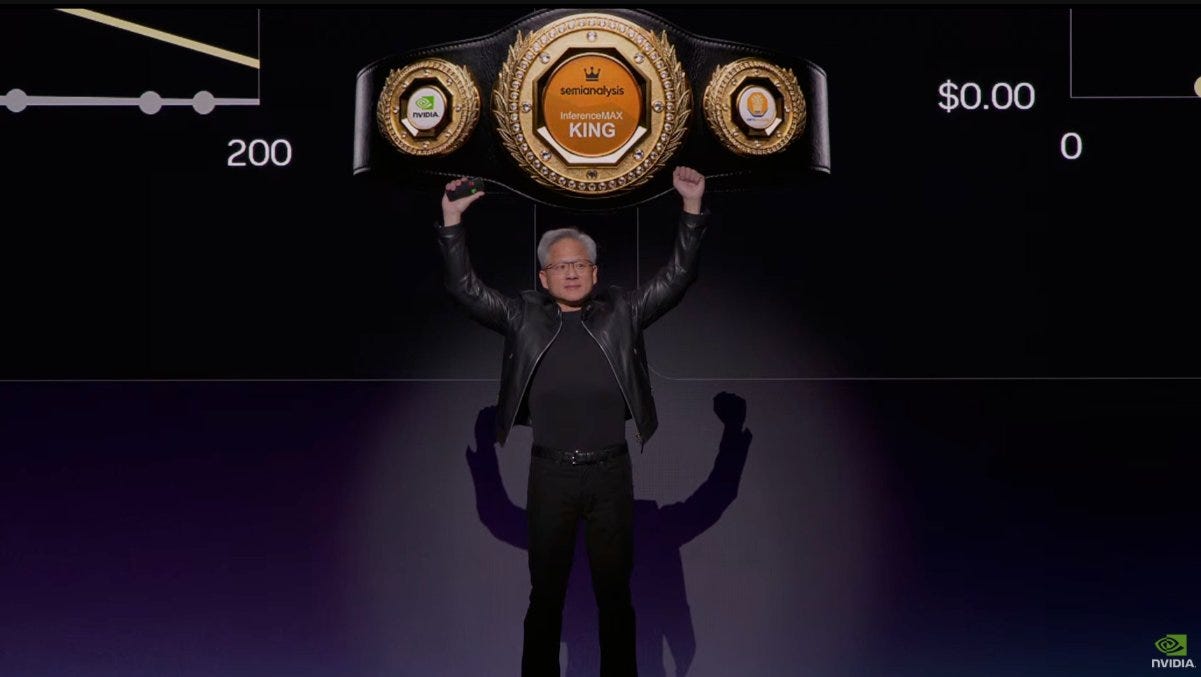
SAN JOSE — I’m standing in the SAP Center watching Jensen Huang do what Jensen does best: make a platform announcement look like a physics lecture and a business model pitch simultaneously. It’s Monday night after a long day of exhibitions, meetings, and parties and I came back to my hotel room to get out what I saw today and how it validated everything I have been writing about the last few months.
On December 24, I wrote in ‘Twas the Night Before Groq that “NVIDIA didn’t buy Groq’s architecture. They bought a boundary condition — and neutralized a threat.”
On February 28, I upgraded that view in The Fourth Piece: “The three-piece convergence — stacked memory, backside power, the compiler — has a fourth piece arriving faster than expected: optically-synchronized dataflow inference.” I listed six specific watch items for GTC.
Today, Jensen checked every single one.
The boundary condition became a product line. And the product line comes with a revenue model that the street isn’t pricing in yet.
