


BEP Research | Ben Pouladian
A note to subscribers: This isn’t a typical BEP Research piece. There’s no earnings breakdown, no supply chain model, no semiconductor deep dive. But it might be the most important thing I’ve written here — because it frames why I invest in and write about AI in the first place. I bought my first shares of NVIDIA in 2016 because of LEDs. I had spent a decade building Deco Lighting, and an LED is essentially a dumb semiconductor — a diode. It’s either on or off. After years of working with these things, I became convinced that the future wasn’t in semiconductors that switch. It was in semiconductors that can provide intelligence. The GPU was the answer. Everything I’ve written since, from Memory Wars to the Pouladian Cheat Code, flows from that original conviction. This piece is an attempt to show where I think it all leads.
February 25th, 2026 → June 30th, 2028
Preface
Two excellent pieces landed this week modeling the macro consequences of AI abundance. Citrini Research wrote the bear case — a “Global Intelligence Crisis” where AI-driven displacement triggers a deflationary spiral and threatens the $13 trillion mortgage market. Michael Bloch wrote the bull case — where technology-driven deflation raises living standards and the labor market rebalances.
Both are rigorous. Both are worth reading carefully. And both are written from the vantage point of Wall Street, looking down through Bloomberg terminals and JOLTS data.
I read them differently than most of their audience will. Not because my analysis is sharper — it probably isn’t. But because when I think about what AI does to the world over the next decade, I’m not only thinking about my portfolio. I’m thinking about the world my three kids are going to inherit. That changes which questions you ask.
There’s something else. As an investor in companies like Terray Therapeutics and VistaPath Bio, and as Chairman of the Leadership Board at Terasaki Institute for Biomedical Innovation, I get to see how AI is being applied in the physical world in real time — not from analyst reports or expert network calls, but from the labs, the board rooms, and the scientists doing the work. When I write about AI-driven drug discovery or AI-powered diagnostics, I’m not extrapolating from earnings transcripts. I’m watching it happen.
Citrini asks: will the labor market break? Michael Bloch asks: will deflation make people richer? I ask: will my daughter grow up in a world where pancreatic cancer is caught early enough to survive? Will her generation have access to medicines that mine couldn’t afford to develop? Will the physical problems we’ve been stuck on for decades finally move? I lost both of my parents to cancer. If early detection had existed at the level AI is now making possible, they might still be here with me today. That’s not an abstraction. That’s what’s underneath every word of this piece.
I’ve spent three years staring at the physical layer. The atoms, not the bits. What happens when you point the most powerful reasoning systems ever built not at spreadsheets and SaaS contracts, but at drug molecules, battery chemistries, cancer diagnostics, and building systems?
What follows is a scenario, not a prediction. A dispatch from June 2028 — not from the trading floor, but from the laboratory, the hospital, and the factory.
What the Macro People Missed
The S&P 500 is at 9,400. Unemployment is 5.1%. The financial commentators are still arguing about whether this is a crisis or a boom. The answer is both, depending on where you stand.
In 2026, the debate about AI was about jobs. By 2028, the debate that mattered was about molecules.
The Drug Discovery Inflection
FDA GRANTS ACCELERATED APPROVAL TO FIRST FULLY AI-DESIGNED SMALL MOLECULE FOR IDIOPATHIC PULMONARY FIBROSIS; INSILICO MEDICINE’S ISM001-055 SHOWS 38% REDUCTION IN LUNG FUNCTION DECLINE VS. PLACEBO IN PHASE III | FDA Press Release, March 2028
This was the headline that rewrote the pharmaceutical industry’s cost structure.
In 2025, bringing a drug to FDA approval cost $2.6 billion and took 10-15 years. The 90% clinical failure rate meant entire disease categories — rare cancers, neglected tropical diseases, neurodegenerative conditions — were abandoned because the market couldn’t justify the spend.
AI changed the economics of failure. By early 2027, AI-designed candidates entering Phase I showed success rates of 80-90%, compared to the historical 40%. AlphaFold-class protein prediction combined with generative chemistry meant molecules were computationally validated against millions of failure modes before reaching human trials.
TERRAY THERAPEUTICS EMMI PLATFORM DELIVERS 4TH CLINICAL CANDIDATE IN 30 MONTHS; BMS AND GILEAD PARTNERSHIPS YIELD 6 DISCOVERY MILESTONES ACROSS HISTORICALLY “IMPOSSIBLE-TO-DRUG” TARGETS; DATASET EXCEEDS 25 BILLION TARGET-LIGAND BINDING MEASUREMENTS | Terray Press Release, January 2028
The math cascaded. When failure rates drop from 90% to 30%, the cost per approved drug collapses exponentially. The $2.6 billion average fell below $800 million by early 2028. Suddenly, every rare disease with a known protein target was economically viable.
Terray’s story embodied the shift. Full disclosure: I’m an angel investor. But the data speaks for itself. Their EMMI platform — Experimentation Meets Machine Intelligence — combined proprietary ultra-miniaturized chip hardware (each the size of a nickel, measuring binding affinity at unprecedented scale) with COATI, a chemistry foundation model trained on billions of molecules. By late 2025, they’d hit their first BMS discovery milestone on a “novel and difficult to drug” target. By 2028, the dataset had grown from 13 billion to over 25 billion target-ligand binding measurements, with design-make-test-analyze cycles running under three weeks per target.
What set Terray apart was the wet lab integration. This wasn’t AI hallucinating molecular structures from a training set. AI designed molecules, robots synthesized them, hardware tested them, results fed back into the model. Every cycle made the next one better. Jacob Berlin had been saying since 2023 that experimental data at scale was the key to unlocking generative AI for small molecules. By 2028, nobody was arguing.
Self-driving laboratories were operating at MIT, Terray, Novartis, and a dozen other pharma companies. Novartis computationally designed 15 million candidate compounds for a CNS target, then synthesized only 60 — arriving at a brain-penetrant molecular scaffold in weeks instead of years.
NATIONAL CANCER INSTITUTE: AI-GUIDED MULTI-CANCER EARLY DETECTION TEST ACHIEVES 89% SENSITIVITY ACROSS 12 CANCER TYPES IN 47,000-PATIENT VALIDATION STUDY; RECOMMENDED FOR INCLUSION IN STANDARD SCREENING GUIDELINES | NCI, April 2028
The diagnostics revolution moved in parallel. AI systems analyzing standard CT scans could now detect early-stage pancreatic, gastric, and liver cancers — historically lethal precisely because they were caught too late. China’s DAMO Academy deployed its PANDA system across 200 hospitals. MIT’s CleaveNet designed peptide-based sensors distinguishing 30 cancer types from a single blood draw.
I’ll make this personal. A pathologist colleague told me last month that an AI system caught a micrometastasis on a slide she’d classified as clean. The patient was rerouted to treatment eight months earlier. “I’m not being replaced,” she said. “But that patient would be in a very different situation without the machine.”
The VistaPath story tracks here. AI-powered pathology made rural clinics diagnostically equivalent to Stanford. The geographic lottery of healthcare quality began to dissolve.
This isn’t Ghost GDP. This is the difference between a 68-year-old woman in Arkansas getting a pancreatic cancer diagnosis at Stage IV — where the five-year survival rate is 3% — and catching it at Stage I, where it’s 44%. That’s what early detection means in human terms.
The Materials Breakthrough the Market Ignored
While the financial press obsessed over SaaS multiples, something quieter and more consequential was happening in materials science.
MIT’S CRESt AUTONOMOUS LAB DISCOVERS NOVEL 8-ELEMENT FUEL CELL CATALYST DELIVERING 9.3X IMPROVEMENT IN POWER DENSITY PER DOLLAR OVER PURE PALLADIUM; PUBLISHED IN NATURE | MIT News, September 2027
Materials science had been an innovation backwater for decades. Search space too vast, validation too slow. A new material could take 10-20 years from lab to deployment. AI compressed that to months.
Self-driving labs began producing results at 10x human-directed speed. MIT’s CRESt explored over 900 chemistries in three months to find a fuel cell catalyst that slashed precious metal requirements by 75%.
UNIVERSITY OF NEW HAMPSHIRE AI PLATFORM IDENTIFIES 25 NOVEL HIGH-TEMPERATURE MAGNETIC COMPOUNDS FROM DATABASE OF 67,573 MATERIALS; FINDINGS COULD REDUCE RARE EARTH DEPENDENCE IN EV MOTORS BY 40% | Nature Communications, February 2028
I’ve followed the rare earth supply chain since my Deco Lighting days sourcing phosphors for LED manufacturing. China controls 60% of rare earth mining and 90% of processing. Every EV motor, wind turbine, and MRI machine depends on these magnets. AI-accelerated materials discovery didn’t just find better magnets — it found paths around the geopolitical chokepoint.
The battery story was equally transformative. AI-guided exploration of solid-state electrolyte compositions identified materials with 35% higher energy density and no fire risk. Toyota and Samsung SDI both announced pilot production lines by Q2 2028.
The macro analysts modeled AI’s impact on services — jobs, wages, spending. They didn’t model AI’s impact on the cost curves of physical technologies. When an AI discovers a catalyst that replaces palladium with abundant metals, that’s not a GDP line item. That’s a structural cost reduction that compounds for decades.
The Engineering Democratization
I co-founded Deco Lighting in 2005 and spent 14 years scaling a hardware company from five people to $50M+ in revenue. I know what it costs to design, test, and manufacture a physical product.
In 2025, designing a new LED driver circuit required three to four EEs working six to eight weeks. By mid-2027, a single engineer with AI tools could produce an equivalent design in four days. The AI didn’t replace judgment about thermal management or power factor correction. It automated the grunt work: simulating component combinations, running thermal models, optimizing PCB layouts.
AUTODESK REPORTS AI-ASSISTED DESIGN TOOLS REDUCE AVERAGE ENGINEERING PROJECT TIMELINES BY 62%; 73% OF SMALL/MID-SIZE MANUFACTURERS ADOPTED AI DESIGN TOOLS IN 2027, UP FROM 8% IN 2025 | Autodesk Investor Day, May 2028
The minimum viable team for a hardware startup shrank from 15-20 to 3-5. Capital requirements dropped proportionally. What used to cost $2-3 million in engineering to reach first production now cost $300-500K.
I think about what this would have meant for Deco in 2005. Products that took 18 months would have been 90-day sprints. We’d have reached profitability two years earlier. Multiply that by every small hardware company in America, and you see why new business formation in physical products hit an all-time high in 2027.
The Platforms That Pivoted
SERVICENOW Q1 2028: “NOW INTELLIGENCE” PLATFORM EXCEEDS $3B ARR; AI AGENT ORCHESTRATION FOR SCIENTIFIC R&D DRIVES 47% NET NEW ACV GROWTH IN LIFE SCIENCES; STOCK AT ALL-TIME HIGH | Bloomberg, April 2028
ServiceNow was the poster child for the bear case in Q3 2026. Seat-based pricing collapsed as customers cut headcount. But McDermott saw what the market didn’t: every pharma company deploying autonomous labs, every manufacturer running AI quality systems, every hospital integrating AI diagnostics needed enterprise-grade orchestration. Someone had to manage workflows between AI agents, human reviewers, regulatory systems, and physical equipment.
ServiceNow stopped selling seats and started selling agent orchestration. The revenue model changed. The need for enterprise orchestration didn’t.
TESLA Q4 2027: ENERGY STORAGE DEPLOYMENTS HIT 87 GWH, UP 230% Y/Y; AI-DISCOVERED SOLID-STATE BATTERY CHEMISTRY ENTERS PILOT PRODUCTION; OPTIMUS GEN-3 DEPLOYED IN 14 AUTONOMOUS LAB INSTALLATIONS | Tesla Earnings, January 2028
The financial press spent years debating FSD timelines and robotaxi economics. Meanwhile, the physical-world AI thesis was playing out in the parts of Tesla nobody on CNBC talked about.
Tesla Energy had become the largest deployer of grid-scale storage, and AI-discovered battery chemistries were entering pilot production at the Nevada Gigafactory — 35% higher energy density, no thermal runaway, 40% cheaper materials. Tesla didn’t discover the chemistry. An AI-guided materials lab did. Tesla’s role was what it had always been: manufacturing at scale.
The Optimus story snuck up on everyone. Gen-3 robots were being deployed not in warehouses but in laboratories — physical sample handling, equipment operation, hazardous material manipulation. The robots didn’t do the thinking. The AI did the thinking. The robots did the reaching, pouring, and loading.
The Compute Bottleneck
None of this happens without the physical infrastructure. This is where my day job intersects with the story.
NVIDIA GTC 2028: RUBIN ULTRA WITH 12-HIGH HBM4E STACKS; “SCIENTIFIC INTELLIGENCE” SKU FOR DRUG DISCOVERY AND MATERIALS SCIENCE SELLS OUT IN 72 HOURS | NVIDIA, March 2028
In 2026, GPU hours were consumed mostly by language models and enterprise productivity. By 2028, the fastest-growing compute segment was scientific AI — drug discovery, molecular dynamics, materials screening, genomics. Novartis, Pfizer, and AstraZeneca all built dedicated AI supercomputers. The national labs expanded AI capacity 5x.
HBM demand — already strained by language model training — faced a second wave from scientific workloads requiring even higher memory bandwidth for molecular simulation. My Memory Wars thesis played out almost exactly as modeled.
SK HYNIX Q4 2027: HBM REVENUE EXCEEDS $9.2B, UP 140% Y/Y; “PHARMA AND MATERIALS SCIENCE NOW 18% OF HBM ALLOCATION, UP FROM 2% IN 2025” | SK Hynix Earnings, January 2028
Optical interconnects told a similar story. Bandwidth requirements for multi-node scientific computing pushed coherent optics demand well beyond what the language model buildout alone would have justified. The companies I’ve been covering — Lumentum, Coherent, Credo — saw addressable markets expand by a factor the sellside hadn’t contemplated.
The Pouladian Cheat Code — 3D-stacked SRAM for edge inference — found its validation not in chatbots but in point-of-care diagnostics. Running an AI pathology model in a rural clinic requires hardware that’s fast, power-efficient, and deployable without a data center.
What Actually Changed
The financial commentators spent 2026-2027 arguing recession vs. boom. Wrong question.
The right question: what happens when the cost of solving hard physical problems drops by an order of magnitude?
Drug discovery costs fell from $2.6B to under $800M per approved drug. Cancer detection hit 85-90% sensitivity across 12 major types, catching disease years earlier. Materials discovery compressed from decades to months. Engineering design cycles shrank 60%. Energy costs began a structural decline.
These aren’t GDP statistics or S&P price targets. They’re the substrate on which the next fifty years of economic growth will be built.
While the macro analysts argued about displaced product managers, AI was discovering a drug for pulmonary fibrosis, identifying a catalyst that makes green hydrogen viable, and catching a woman’s cancer before it spread.
The Intelligence Premium Didn’t Unwind. It Migrated.
Citrini said the intelligence premium was unwinding. Bloch said it was being democratized. Both miss the point.
It migrated — from information processing to physical world interaction.
The value of analyzing spreadsheets declined. The value of designing experiments, interpreting biological results, commissioning manufacturing lines, navigating regulatory pathways — that increased. Intelligence became abundant. The ability to translate intelligence into physical outcomes remained scarce.
The economy didn’t collapse or boom. It restructured around a new scarcity: not intelligence itself, but the infrastructure and expertise to deploy it against the physical world.
The Canary Is in the Lab
But you’re not reading this in June 2028. You’re reading it in February 2026.
The first AI-designed drugs are entering Phase III. The first autonomous labs are running. The first AI-discovered materials are being synthesized. The infrastructure — GPUs, HBM, optical interconnects, edge inference chips — is being built right now, and demand is about to steepen from a direction almost nobody on Wall Street is modeling.
The macro debate matters. But it’s incomplete without the physical layer. The most important returns from AI won’t show up in the next JOLTS print. They’ll show up in five-year survival rates, battery energy densities, and the number of diseases with a viable therapeutic pathway.
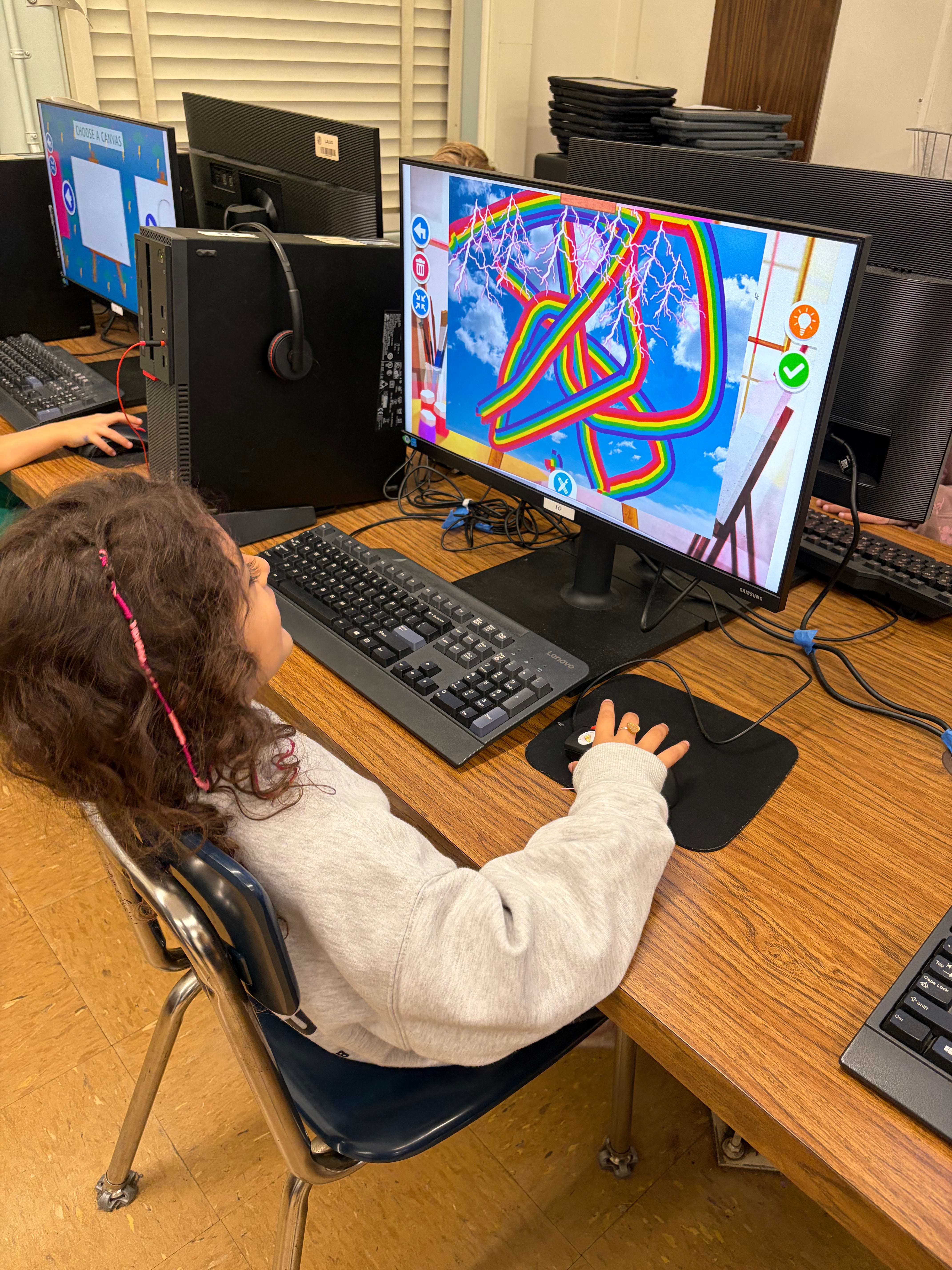
Last week I watched my daughter in her school computer lab, making rainbow art on a screen, completely unselfconscious about the compute underneath her fingertips. She doesn’t know what an HBM stack is. She doesn’t care about JOLTS data. She’s just creating — in a world where intelligence is already abundant and getting cheaper every day.
The question I keep coming back to isn’t whether my portfolio is positioned correctly. It’s whether the physical world she inherits will be meaningfully better because of what’s being built right now, in labs I’ve visited, by scientists I know, on infrastructure I’ve spent three years analyzing.
I believe it will.
The canary isn’t just alive. It’s in the lab. And it’s about to sing.
Ben Pouladian is the CEO of BEP Holdings, Chairman of the Leadership Board at Terasaki Institute for Biomedical Innovation, and publisher of BEP Research. He holds an electrical engineering degree from UC San Diego, where he worked in Professor Fainman’s ultrafast nanoscale optics lab on silicon photonics and micro-ring resonators. He co-founded Deco Lighting in 2005, scaling it from 5 people to over $50 million in revenue before exiting in 2019.
Resources
Citrini Research, “The 2028 Global Intelligence Crisis” (February 2026)
Michael Bloch, “The 2028 Global Intelligence Boom” (February 2026)
Alap Shah / LOTUS, “The Intelligence Explosion” series
Terray Therapeutics EMMI platform and BMS discovery milestone (December 2025)
MIT CRESt autonomous materials discovery platform (Nature, September 2025)
MIT CleaveNet AI-designed cancer diagnostic sensors (January 2026)
UNH Northeast Materials Database for magnetic materials (Nature Communications, February 2026)
NC State flow-driven autonomous laboratory (Nature Chemical Engineering, July 2025)
Novartis AI-driven CNS drug design program (WEF, January 2026)
I hope lots of people read this, Citrini perspective was interesting for sure, but the level of concern that followed it was overdone imo