


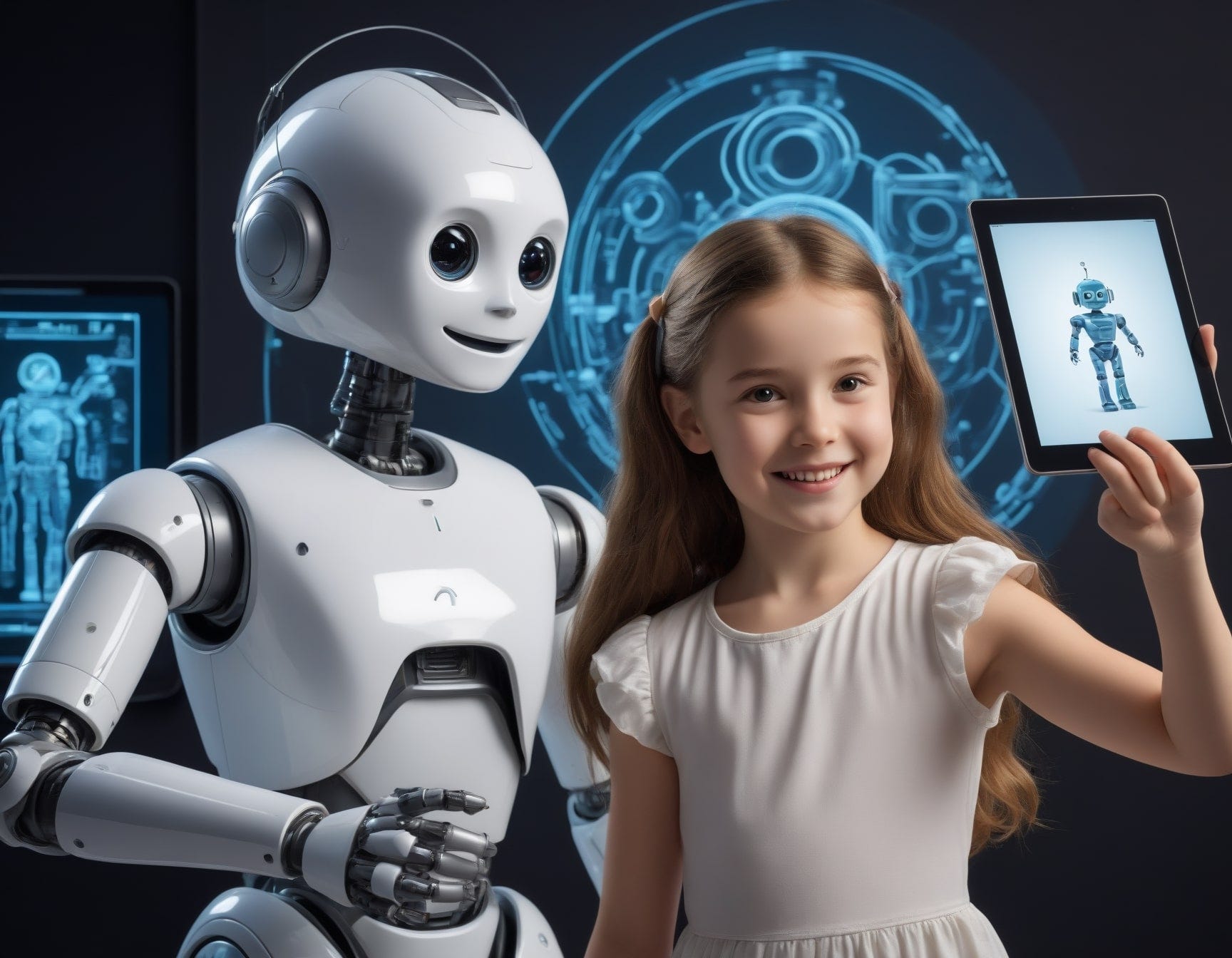
A Father’s Wake-Up Call
On June 17, 2025, I opened an internal memo from Amazon CEO Andy Jassy titled “Some thoughts on Generative AI.” As the father of three girls (ages 10, 9, and 4), I couldn’t help but read it through the lens of their future. Jassy’s message was clear: generative AI isn’t a far-off sci-fi concept – it’s here, transforming work and life today. In his words, “AI agents will change how we all work and live,” performing tasks we once thought only humans could do. Amazon is already using generative AI in virtually every corner of the company, from a smarter Alexa that can take actions for users to internal tools that automate customer service and logistics. Technologies like generative AI, Jassy wrote, are “once-in-a-lifetime” breakthroughs that completely change what’s possible. Reading this as a parent, I realized: the world my daughters will enter as adults is being reinvented right now.
Inside Amazon’s AI Transformation
Jassy’s memo painted a picture of a company “leaning in” to AI. Amazon already has over 1,000 generative AI services and projects in the works. New AI agents – essentially smart software assistants – are proliferating. These agents can scour the web for research, write code, find anomalies, translate languages, and automate tasks on command. Jassy expects “billions of these agents” to be built across every field, including ones that handle personal chores like shopping or travel planning. Crucially, these AI agents will serve as teammates, not just tools. They’ll provide a head start on work so employees can “focus less on rote work and more on…strategic” innovation. In Jassy’s view, leveraging the right AI co-workers can “rapidly accelerate our ability to make customers’ lives easier and better… and make our jobs more exciting and fun”.
This enthusiasm comes with a sobering reality: work itself will change. Jassy acknowledges that as Amazon rolls out more AI and agents, “we will need fewer people doing some of the jobs that are being done today, and more people doing other types of jobs.” In fact, he predicts these efficiency gains will likely reduce Amazon’s total corporate workforce in the next few years. Certain roles will be automated away, while new roles (many involving building or managing AI) will be created. As an employee, that’s a daunting prospect. But as a dad, it raises bigger questions about the world my kids will graduate into.
A Generation Facing an AI-Powered Job Market
My daughters’ generation – Generation Alpha – will be the first to grow up with generative AI as a normal part of life. The oldest Gen Alphas are barely teens today, but in 10–15 years they’ll be entering the workforce. What kind of job market will await them? If Amazon’s vision is any indicator, AI agents and automation will be ubiquitous, handling everything from routine paperwork to complex problem-solving. Studies already suggest that roughly two-thirds of Gen Alpha will work in jobs that don’t exist today . It’s not just Amazon. Across industries, companies are investing in AI to reinvent how work is done. Goldman Sachs estimated in 2023 that AI could affect 300 million jobs worldwide by 2030 – about 18% of all work globally . That doesn’t mean 300 million people will be unemployed, but it does mean almost every profession will adapt to AI in some way.
For Gen Alpha, this transformation is double-edged. On one hand, AI could eliminate repetitive drudgery – potentially making work more fulfilling. Jassy himself noted that early-career Amazon teams (back in the ’90s) were “leaner” and could have huge impact, even without today’s AI tools. Now that “the most transformative technology since the Internet is here,” those who embrace AI can amplify their impact. In other words, tomorrow’s workers (our kids) will have AI teammates to boost their productivity and creativity. On the other hand, automation will replace many tasks outright. Entry-level roles that previous generations used to get a foot in the door might be handled by an AI agent. The job market could become a barbell – heavy on high-skill tech-driven roles and human-centric creative or care roles, but lighter on the middle. No generation has ever faced a disruption of this speed and scale at the very start of their careers.
The AI Ecosystem: It Takes a Village (and Powerful Chips)
It’s important to remember Amazon isn’t marching into this AI future alone. A whole ecosystem of tech is powering this revolution – and one name stands out: Nvidia. If generative AI is the new electricity of business, Nvidia’s GPU chips are the power grid. In fact, Amazon’s cloud unit (AWS) has a deep partnership with Nvidia to beef up its AI capabilities. AWS is rolling out new infrastructure featuring Nvidia’s latest processors (like the cutting-edge Blackwell GPUs) to train and run multi-trillion-parameter AI models faster and more cheaply . Jensen Huang, Nvidia’s CEO, said their collaboration with AWS provides “unprecedented computing power” to push the boundaries of what AI can do . This arms race in AI is visible across the industry – Microsoft, Google, OpenAI, and others are all tapping massive computing power (often powered by Nvidia hardware) to build ever smarter systems. The generative AI boom has even catapulted Nvidia into one of the world’s most valuable companies, with its market value surging into the trillions as demand for AI chips explodes .
For Gen Alpha, this means the AI tools available in their 20s will be far more advanced than what we see today. Think of how much smartphones evolved over 10–15 years – now apply that pace to AI. Amazon’s memo mentions AI “agents” shopping for you, scheduling travel, and handling business analytics. Many of these are already here in early forms. By the time my 4-year-old is out of college, her “coworkers” might include AI assistants so capable they feel almost like human collaborators. It’s exciting – and a little unnerving – to imagine. But it underscores that their generation’s success will depend on working fluidly with intelligent machines.

Preparing Gen Alpha to Thrive
As a parent, I find hope and guidance in Jassy’s advice to his employees: “Be curious about AI, educate yourself… use and experiment with AI whenever you can.” In our household, my wife and I have started talking to our kids about AI in age-appropriate ways – what it is, how it works, and how to use it responsibly. It turns out, we’re not alone. A recent survey found 88% of U.S. parents believe knowledge of AI will be crucial to their child’s future success . Yet many schools are lagging in teaching it. This is a call to action for educators and parents alike: we need to close the AI knowledge gap. Here are a few ways we can help the next generation adapt and thrive:
Build AI Literacy Early: Encourage kids to learn about AI and coding basics the way we encourage reading. There are kid-friendly coding apps and AI chatbots that can spark interest. Early familiarity will make AI a tool, not a mystery.
Emphasize Human Skills: While technical skills are key, uniquely human qualities will be just as important. Creativity, complex problem-solving, ethical reasoning and emotional intelligence are skills AI can’t easily replicate . Support activities – from team sports to creative arts – that cultivate these abilities.
Encourage Adaptability and Curiosity: The best preparation for a changing job landscape is learning how to learn. Gen Alpha should be ready to upskill throughout their careers. Nurture their curiosity. If they meet a new technology or problem, prompt them to ask “how does this work?” and seek answers. Lifelong learners will always find relevance.
Model Responsible AI Use: Show kids positive uses of AI (like using a language model to brainstorm an essay outline) and discuss the limits – e.g. why blindly trusting AI can be risky. As leaders and parents, we must also advocate for AI ethics and guidelines in schools and workplaces, so the next generation inherits technology that aligns with human values.
Promote STEM and Beyond: Support a strong foundation in STEM education – many future jobs will spring from science, tech, engineering, and math. At the same time, highlight the importance of humanities, arts, and social skills. The world will need well-rounded individuals who can bridge technology and humanity.
A Future We Shape Together
At the end of his memo, Jassy struck a forward-looking tone: “Those who embrace this change… will be well-positioned to have high impact” as Amazon reinvents itself with AI. I would extend that sentiment beyond Amazon. As generative AI reshapes our economy, those who embrace change, stay curious, and uphold human values will shape the future. That includes our children – and it includes us, the parents, educators, and leaders guiding them.
My daughters’ generation will face challenges and opportunities unlike any before. It’s our responsibility to prepare them now. That means pushing for education reform to integrate AI, demanding corporate responsibility in how AI is deployed, and continuously learning ourselves so we can mentor the next wave. Generative AI will undoubtedly change the jobs they find and how they work. But with thoughtful preparation, we can ensure it amplifies their potential rather than diminishes it.
Ultimately, the future of work isn’t something that just happens to us – it’s something we are creating. In our homes, in our classrooms, and in our companies, we must be proactive and deliberate. I’m inspired by the possibilities AI offers my kids, but I’m also determined to help them navigate it. The call to action for all of us is clear: embrace the transformative power of AI, but channel it responsibly. If we do that, we won’t just prepare Gen Alpha for the future – we’ll empower them to build it.
Let’s make a collective effort – as parents, teachers, and leaders – to stay informed, invest in learning, and advocate for an equitable, ethical AI-driven world. The next generation is counting on us to lead by example